Workforce Development
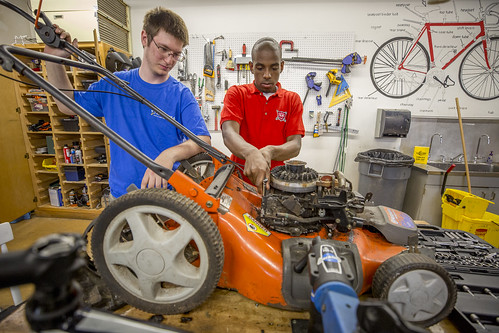
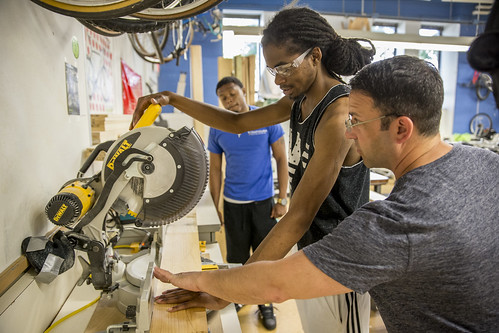
Out-of-School Time (OST) can play a critical role in preparing children and youth for their future careers by helping them to build foundational skills like communication, teamwork, and critical thinking. OST can also play a role in giving students the opportunity to learn about and experience aspects of career options they may not have exposure to in their daily lives. For older youth, OST can help to build specific skills that align with career interests and may be a bridge to a apprenticeship or internship to provide real-life experience with work-life goals.
NMOST values
Research
This section provides links to research and program information pertaining to OST and workforce development, as well as link to information about internships and other opportunities, and the dual credit programs at New Mexico’s universities and colleges.
Afterschool and Summer Workforce Database
The workforce challenges faced by afterschool and summer programs today are impacting their ability to meet the needs of children, youth, and families. Fortunately, workforce strategies and solutions are emerging, including those originating within our field and also in the early childhood and non-profit sectors. Use this searchable database to learn about local, state, and national practices that are contributing to a thriving workforce. Strategies address issues such as recruitment, retention, compensation, career pathways, staff wellbeing, BIPOC leadership, and more.
Perkins Collaborative Resource Network (PCRN)
In an effort to leverage and connect the efforts of policy makers, educators, and employers, the U.S. Department of Education compiled the Employability Skills Framework and developed related tools, media and resources.
Power of Us Workforce Survey
The Power of Us Workforce Survey is a national, cross-sector survey aimed at building a baseline understanding of the youth fields workforce—who they are, where they work, what they do, and what they experience on the job and in their careers.
The Riley Institute
The question of America’s future economic health remains a top national concern, and developing tomorrow’s workforce is a key part of that discussion. Afterschool experts have begun to ask how the field of afterschool and expanded learning contributes to the development of these workforce readiness skills.
NMOST supports
Dual Credit Programs
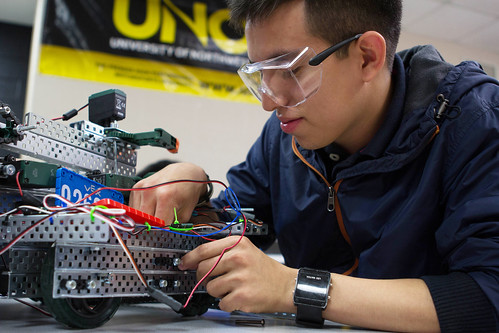
High school students have a unique opportunity to take tuition-free classes at one of the many colleges and universities around the state and receive credit both toward high school graduation and toward a postsecondary degree or certificate. Whether classes are used to get a jump on a degree, or to begin training for a career in areas like renewable energy, healthcare, criminal justice, dental hygiene or automotive technology, dual credit programs can give our older youth a jump start on life after high school.
The DC Program
Every New Mexico high school student has the opportunity to enroll in college courses through the Dual Credit (DC) Program. The DC Program provides access to academic and career and technical education (CTE) courses that deliver simultaneous credit toward high school graduation and a postsecondary degree or certificate. College courses are offered for dual credit based upon agreements between high schools and accredited public colleges. Dual credit courses are accessible to students with a range of academic and career aptitudes. Research studies on dual credit participation have shown that dual credit enrollment contributes to improved academic performance. Students who take dual credit courses perform well in their courses, graduate from high school at a higher rate than their peers, require less first-semester remediation in college, and are more likely to obtain a college degree within four years.

Dual Credit Opportunities
Below shows the links to the dual credit information at the various colleges and universities in the state.
Northern New Mexico
- New Mexico Highlands (Las Vegas)
- Luna College (Las Vegas)
- University of New Mexico - Taos campus
- Santa Fe Community College
- Institute of American Indian Arts (IAIA) (Santa Fe)
- Northern New Mexico College (Española)
- University of New Mexico - Los Alamos campus
- San Juan College (Farmington)
- Diné College - Crownpoint Campus
- Navajo Technical University (Crownpoint)
- Diné College - Shiprock Campus
Central New Mexico
- Clovis Community College
- Eastern New Mexico University (Portales)
- University of New Mexico (Albuquerque)
- Central New Mexico Community College (CNM) (Albuquerque)
- Southwestern Indian Polytechnic Institute (SIPI) (Albuquerque)
- University of New Mexico - Valencia County campus (Los Lunas)
- New Mexico Tech - (Socorro)
- New Mexico State University - Grants campus
- Mesalands Community College (Tucumcari)
- University of New Mexico - Gallup campus
Southern New Mexico
- New Mexico Junior College (Hobbs)
- Eastern New Mexico University - Roswell campus
- Eastern New Mexico University - Ruidoso campus
- New Mexico State University - Alamogordo campus
- New Mexico State University (Las Cruces)
- Doña Ana Community College (Las Cruces)
- Western New Mexico University (Silver City)